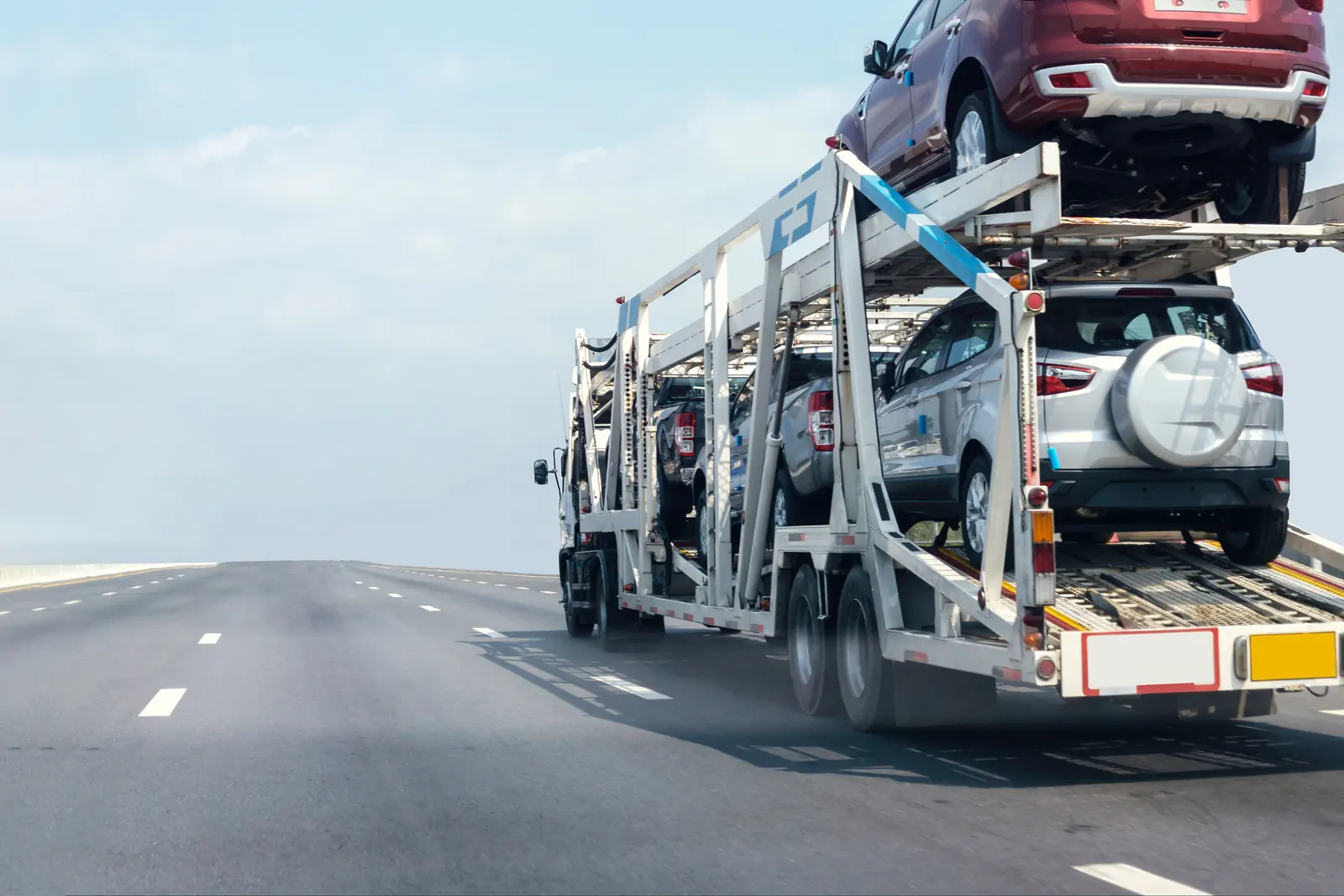
Most affordable
Open Transport
The industry standard and the way roughly 9 out of 10 vehicles move. Your car rides on a multi-level carrier alongside up to nine others.
- Fastest carrier availability
- Same insurance as enclosed
- Best for daily drivers
Ten ways to ship, one specialist coordinating all of them. Tell me the year, make, and model and I will tell you honestly which one your vehicle actually needs.
A daily driver and a numbers-matching Shelby do not belong on the same trailer. Tell me what you have and I will tell you honestly what it needs — even when that is the cheaper option.
The industry standard and the way roughly 9 out of 10 vehicles move. Your car rides on a multi-level carrier alongside up to nine others.
A fully covered trailer — no road debris, no weather, no eyes. The choice for anything rare, low, or irreplaceable.
Low-clearance supercars, six-figure sedans, and anything you would not hand to a stranger. Vetted carriers only.
Original paint, period tires, and no A/C. Handled by drivers who know that a 1967 fastback is not a rental.
Cruisers, sport bikes, trikes, and vintage frames — chocked, strapped, and often crated inside an enclosed pod.
Lifted, dually, long-bed, or roof-racked. Oversized vehicles need the right deck position — we book it up front.
Project cars, auction buys, and insurance salvage. As long as it rolls, brakes, and steers, we can winch it on.
Oversize and over-height loads with the permits, pilot cars, and routing that legally keep them moving.
Recurring lanes, auction runs, and multi-unit moves with one point of contact and consolidated billing.
North in April, south in October. Book the round trip once and lock the rate before the season squeezes capacity.
The point of an enclosed trailer is that nobody can see in — which makes it the hardest thing to show you. So here is the cutaway.
Wheel straps, not chains
Held by the tyres
Triple axle
Load spread, less bounce
Rear ramp, shallow angle
Low-clearance safe
Illustration — equipment shown is representative of the enclosed trailers used on these moves.
No road debris, no weather, no eyes at a truck stop wondering what is on the trailer. What goes in is what comes out.
A shallow ramp angle and a flat deck mean splitters and air dams clear without scraping. Ground clearance under five inches is routine here.
Wheel straps, never chains on the suspension or frame. The vehicle is held by its tyres, so nothing loads the bodywork.
Enclosed carriers routinely hold coverage up to $1,000,000+, against $100k–$250k typical on an open trailer.
Not sure your vehicle needs it? Call me and describe it. If open transport is the right answer I will tell you, even though enclosed pays me more.
Everyone uses the same carrier network. What changes is who answers when something goes wrong, and whether the number you were quoted survives contact with reality.
| What you get | Working with me | Typical big broker | Lead-selling site |
|---|---|---|---|
| One specialist start to finishSame name, same number, every call | |||
| Quote is the price you payNo "the carrier needs more" call | |||
| $0 until a carrier is assigned | |||
| Your phone number stays privateLead sites resell it to 5–10 brokers | |||
| Carrier insurance verified before dispatch | |||
| Direct driver contact once dispatched | |||
| Told honestly when a cheaper option is better | |||
| Typical time to first human answer | Minutes | Hours | Instant spam |
Straight answers, including the ones that cost me money to give honestly.
Most cross-country moves land between $900 and $1,500, and shorter regional runs between $500 and $800. The real drivers are distance, vehicle size and weight, open versus enclosed, whether it runs, how flexible your dates are, and current fuel and lane demand. Your quote is all-in — pickup, delivery, fuel, tolls, and cargo insurance are already in the number.
Sixty seconds for an honest estimate. No deposit, no obligation, and no handing your number to five other brokers.